Casino Card Table Design and the Boundaries That Organise Play
Casino card table design reveals how cloth, rails and printed layouts organise cards and wagers, helping you understand how the table stages play.
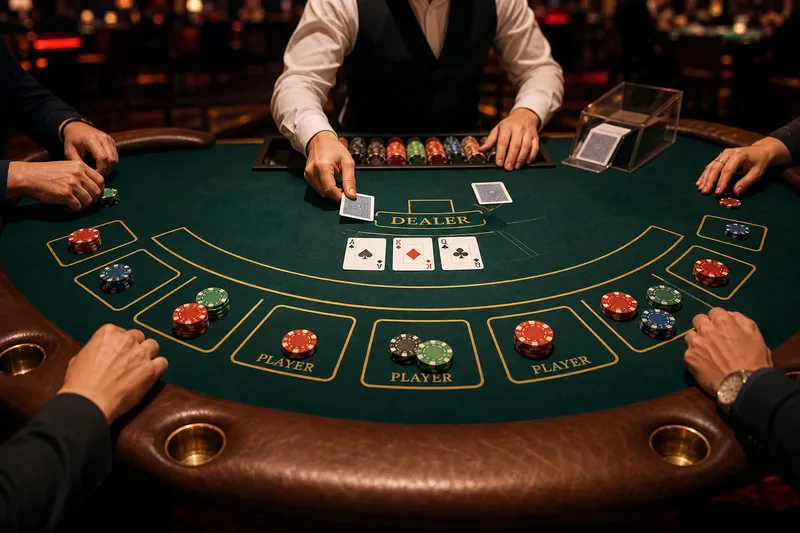
What does casino card table design do besides mark places for cards and wagers? It turns a broad surface into a stage for repeated gestures: dealing, placing a bet, gathering cards and watching the dealer. Its shapes and materials give those actions a visible setting, while the table’s construction also reflects the atmosphere a venue wants to create.
Rails and gathering
The padded rail gives the table a substantial perimeter. It separates the playing field from the surrounding room and places players close to the shared action. Upholstery, stitching and the curve of the edge contribute to the table’s character as well as its physical form.
A rail can make a crowded arrangement feel contained, even when several people are leaning towards the centre. Its boundary is architectural rather than merely graphic: it is a part of the furniture that frames faces, hands and objects in the play area.
Notice how the edge shapes the gathering, not only where the printed layout stops.
Cloth as a stage
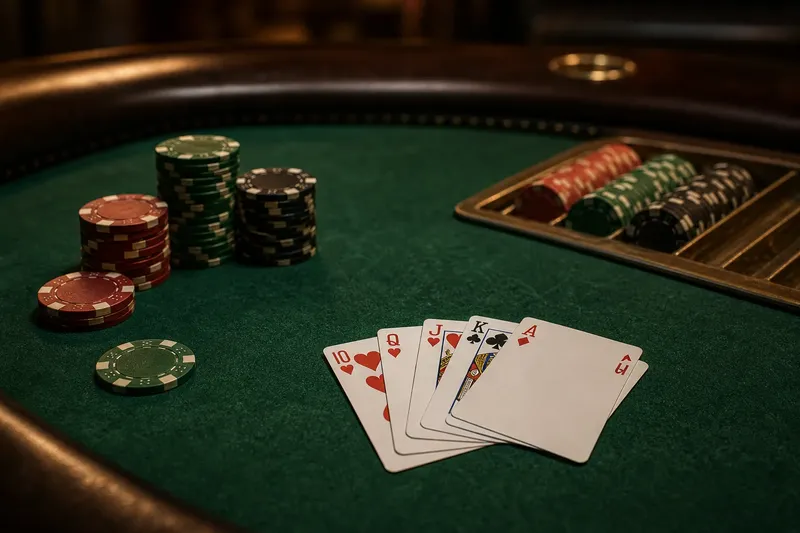
The cloth-covered field gives cards and chips a visually continuous setting. Its colour can set the tone of the table, while the printed design places symbols and text within that field. Card movement and sound vary with the cloth and the way objects are handled, but the material also matters as a backdrop: it helps distinguish the game’s objects from the surface beneath them.
As cards and chips accumulate, the layout becomes a changing composition. A printed motif may remain visible in some places and disappear beneath objects in others. The table is therefore not a fixed picture; its appearance shifts with each round of play.
Marks and visual hierarchy
Lines, circles and labels organise attention. A blackjack betting box, a roulette number grid and a poker layout with player positions each create a different visual order. Their forms reflect the distinct arrangements of those games, giving a player or observer a quick sense of where activity is gathered.
Typography and spacing shape how easily that order can be read. A label placed close to a betting position feels associated with it; a line around a zone gives it a stronger visual boundary. These are design choices about hierarchy and grouping, not simply decoration.
Imagine a designer begins with a poker layout where the player labels sit close to the shared-card area. They move the labels beside the corresponding player positions and leave the other markings untouched. The expected visual result is a clearer association between each name and its place, while the shared field retains its separate visual focus.
Distinct table identities
Game layouts produce recognisable visual identities. Roulette’s numbered field creates a dense, ordered pattern; blackjack’s betting positions repeat around the dealer’s area; poker layouts often draw attention towards a central space for shared cards. The arrangements are not interchangeable because each game gathers attention differently.
Even within one kind of game, a table’s typography, colour choices and spacing can give it a particular visual voice. A restrained layout may make the printed structure recede, while bolder marks can make the zones more prominent. In both cases, the surface helps establish how the game is presented to the room.
What table details suggest?
Why do casino tables use cloth?
Cloth creates a continuous playing field beneath cards and chips, and its colour and texture contribute to the table’s appearance. The way objects move across it depends on the material, its condition and how they are handled.
What does the rail contribute?
The rail frames the central field and gives the table a defined edge around which people gather. Its upholstery and shape also contribute to the furniture’s visual and tactile character.
How do printed marks shape the layout?
Lines, labels and symbols group parts of the surface and give the eye a route through them. Their arrangement can make a table’s visual structure more or less prominent.
Why do games have different table layouts?
Each game brings its own arrangement of cards, wagers and shared objects, so the surface takes a different form. The contrast among layouts is part of how each game is visually recognised.
How does the surface frame play?
What draws the eye first?
Look at the contrast between the printed field, its labels and the objects placed on it. The strongest colour, shape or concentration of marks often becomes the table’s visual centre.
How does the rail shape the gathering?
Observe how its curve brings players around the central field and sets that space apart from the room. Upholstery and padding can make the edge feel more like a seat-side boundary than a printed line.
What changes during a round?
Cards, chips and hands cover parts of the printed design, so the surface’s appearance shifts as play proceeds. The contrast between fixed marks and moving objects gives the table a changing visual rhythm.
For a closer look, follow the contrast between the stable table and the objects that move across it.
Reading a table visually
These observations help describe the design and composition of a card table. They focus on what the surface looks like and how its elements are arranged.
- Check whether the rail curves towards the playing field; if it does, note how it draws the gathering inward, but if it stays visually flat, focus on how the printed layout defines the centre.
- Check whether the cloth colour contrasts with the cards and chips; if it does, describe how those objects stand apart, but if it does not, consider how the printed marks create separation.
- Check whether labels sit beside the areas they name; if they do, note the visual grouping, but if they are distant, describe how lines or repeated symbols connect them.
- Check whether the layout is dominated by a grid, repeated boxes or an open central field; if one form dominates, identify how it sets the visual rhythm, but if none does, look at the balance among the separate zones.
- Check whether cards and chips cover the printed motifs; if they do, note how play interrupts the design, but if the motifs remain visible, describe how they continue to frame the activity.
- Check whether the table’s colours and lettering feel restrained or prominent; if they are restrained, note how the objects become the focus, but if they are prominent, describe how the layout itself claims attention.
These choices make the surface legible as a designed object, not just a place where a game happens.
Design as ritual
Casino card tables bring people into a shared arrangement. The rail frames their gathering; the cloth provides a continuous field; repeated marks give the surface a visual order. Together, these features lend familiar gestures a setting that can be recognised from across the room.
The table also expresses the venue’s sense of occasion. Materials, colour and lettering can make a layout feel formal, vivid or understated without changing the game’s basic structure. Casino card table design is therefore both practical furniture and visual culture: an object that arranges a room’s attention as well as its play.
When looking at casino card table design, notice the relationship between the table’s fixed architecture and the shifting arrangement of people and objects. That contrast is what makes the surface feel active even when its printed pattern stays still.