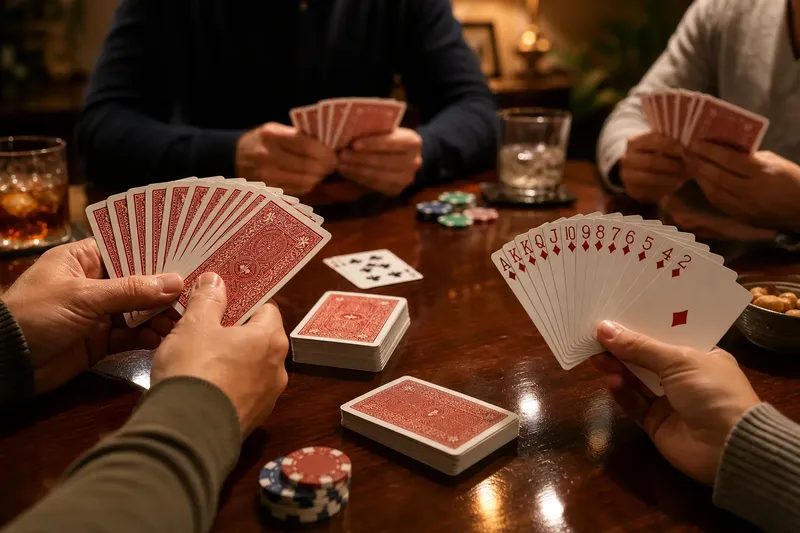
The Green Table and the History of Casino Felt
Casino felt history helps you read green gaming tables as designed surfaces, distinguish visible materials from visual shorthand, and assess what an image can support.
Why does casino felt so often appear green, and what can its history actually tell us? Casino felt history is less a story of one documented origin than a way to read the table as a designed surface: its colour, texture and role in an image.
Reading the surface
“Casino felt” is a loose everyday name, not a reliable material description. Felt is formed by matting fibres; woven cloth is made from interlaced threads. A gaming table may also be covered with another fabric or a manufactured material. A photograph can show colour and texture, but rarely settles the surface’s composition on its own.
Green is a familiar visual choice, but a green surface cannot tell you when a table was made, where it stood or whether it was used for gambling. Those claims need evidence beyond appearance, such as a dated catalogue entry or a record tied to an identifiable object.
When examining a table or image, keep separate notes for what is visible and what remains an interpretation.
Green as design
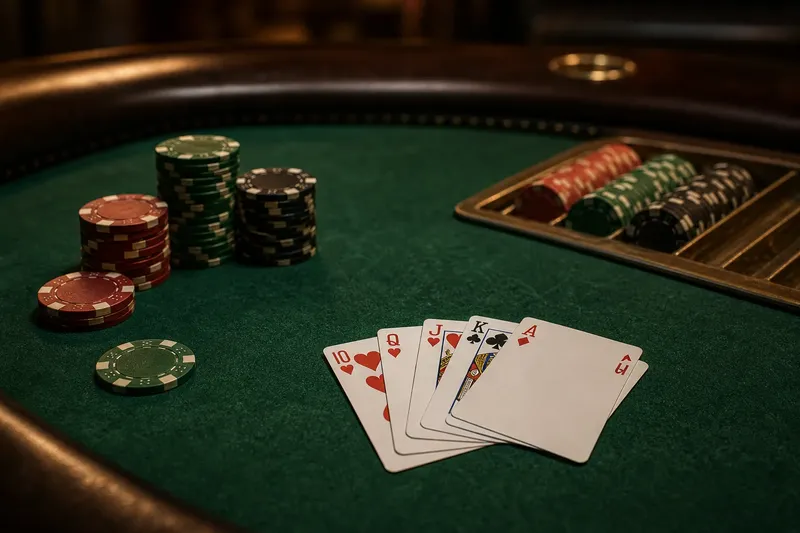
A green playing surface gives cards and other game objects a distinct setting. Its meaning also depends on the surrounding design: a padded rail, polished trim, directional lighting or a printed border can make the same colour read as restrained, theatrical or nostalgic.
Film, photography and illustration have made the green table a recognisable sign of casino play. That visual shorthand can establish a scene quickly, even when the image shows little of the room. It tells us how the maker chose to represent gambling, not necessarily how a particular venue furnished its tables.
For a design reading, describe the visible choices first: the surface colour, texture, edges and lighting. Then consider what mood those choices create.
Images and evidence
A picture can support claims about what it depicts, but its limits matter. A clear green surface is an observation; a claim that it is wool felt, belongs to a certain decade or represents common practice needs other support.
- If the caption names a material and its source is traceable, record that attribution; if not, describe the visible texture without naming the fibre.
- If the image has a dated, reliable record, use that date for the image; if not, leave the date open rather than deriving it from the table’s colour.
- If a venue is identified by a trustworthy catalogue or archive record, name it as the recorded location; if not, describe the setting without assigning a casino.
- If the table’s edges, rail or fittings are visible, include those details in the description; if they are obscured, do not infer the table’s construction.
- If the image is clearly an illustration or staged scene, discuss its visual choices; if its status is uncertain, avoid treating it as a documentary photograph.
- If a source identifies the game, include that attribution; if the cards or equipment are indistinct, leave the game unspecified.
Say a curator is given an undated photograph labelled only “green table”, with no venue or material information. The curator records the visible green covering, a dark rail and a fan of playing cards, then searches the accompanying catalogue for a date and provenance. In this invented situation, the catalogue has no further record, so the resulting description identifies a green gaming table in an undated photograph and makes no claim about its fabric or location. The trade-off is a narrower description that stays within the available evidence.
Questions about casino felt?
Was every casino table green?
No. Green is a familiar design convention, not a universal rule. A table’s colour alone cannot establish how widely a particular choice was used.
Is casino felt always felt?
No. The phrase is often used loosely for gaming-table coverings, including woven cloth and other materials. A precise material identification needs a reliable description or direct examination.
Can the green convention be dated precisely?
Not from colour alone. Dating a particular table or image calls for evidence connected to that object, such as a trustworthy record or provenance.
Why does green suggest casino play?
Repeated use in images and visual design has made green tables recognisable as a sign of gambling. That association is a cultural convention, not a rule about how a table must look.
Describing tables carefully
For a museum label, collection note or visual analysis, use the most specific wording the evidence allows. “Green gaming table” describes appearance; “woven wool cloth” makes a material claim and needs support. “Casino table” may imply a setting or use that the image alone cannot establish.
Casino felt history is therefore useful as a question about design and representation, rather than a hunt for a single origin story. When you encounter a green table, begin with the surface you can see, then let reliable records—not familiarity—determine how much more you can say.